Friday, February 26, 2016

Ontological Absences: Deconstructing the Aphasia of Dilatory, Coprophagic Recidivism in Post-Ellipsoidal Democracy


It is, of course, common knowledge that, as expressive aphasia manifests exponential bicameral bifurcation, this absence of absences must necessarily propagate entropy with parallel exponentiality in all post-ellipsoidal political venues and contexts. What is less obvious is the near occasion of such vacuums, their underlying support systems, or ontologically speaking, their foundational intra-organic vacuity. Fortunately, a recent study commissioned by the National Academy of Discursive Disorders and conducted in synapses-controlled hypnotic environments in an underground, and hence solipsism-neutral laboratory, has yielded unambiguously recondite data in this matter.

Hence, we can now state with absolute socio-spatial, diachronic certainty that individuals possessing severalized and compendious authoritarian proclivities respond neo-necrologically to any meta-geographical structuration of pneumatic liquidity. Indeed, the aforementioned study demonstrates sine dubito that all those of political persuasion, even individuals relatively uncontaminated by derivational fiduciary symbiosis, manifest a perspicuous nexus to and with strangulated or mutated glossolalia as well as a concomitant predisposition to coprophagia. Corroborating, albeit anecdotal and occasionally otiose evidence of this recidivistic etiology can be assayed daily in the pages of the New York Times. 


Thursday, February 25, 2016

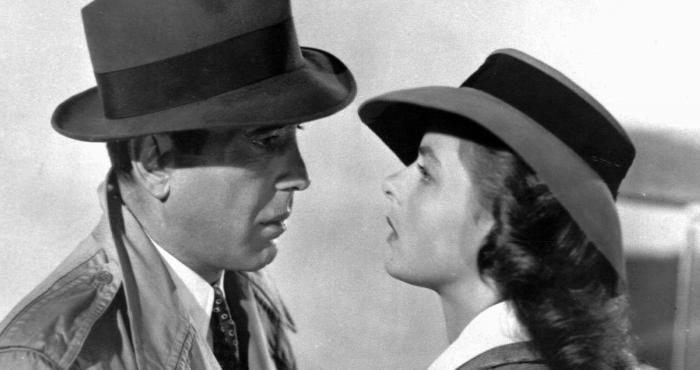
Lucky Americans: We'll Always Have Paris...and Canada


As the unthinkable becomes increasingly thinkable--the actual possibility of a Donald Trump or Ted Cruz presidency--I am taking stock, while nonetheless attempting to avoid panic. After all, if recent history is any indication, America's basically dysfunctional system of checks, balances and redundancy would probably prevent either of them from implementing the maddest and most inhumane of their vile schemes, in which case I might be able to just slog along, pissing and moaning, without feeling an absolute moral imperative to renounce--and leave--the US itself. 

But if a worst-case scenario were to develop, if either of these despicable creatures managed to enact the malignant (and yes, un-American) fundamentals of his platform, I suppose I would have to take steps--try to sell my house, cash in the remainder of my IRA, and attempt to live out my remaining years in Canada or France. The bell will eventually toll, of course--for me as for all--and I am already an old man. Yet, this certainty of death only heightens the irony of my grief--as I reflect that now, at the end of my life, the only place where I might be able to die with a measure of self-respect (faithful to what I have always considered decent American values) is on the soil of a foreign land.

Well, I must lift up my heart anyway, I suppose. After all, this peculiar reverse "home-sickness" is not a new phenomenon, nor is my experience unique. From the Revolutionary War loyalists to the Underground Railroad runaways to the Jazz Age expatriates, dissenting and disheartened Americans have always looked North and Abroad for refuge, perhaps, renewal.

Lucky Americans: we'll always have Paris...and Canada.


Thursday, January 21, 2016

Liberty, but not Equality and Fraternity


Liberty, Equality, Fraternity. Noble goals, all, but despite our lip service thereto and our prattle about liberty and justice for all, these three ideals (also piously enshrined in the national motto of France) have proven very difficult to reconcile with one another, especially in our American context.


This is so because, in truth, Americans simply don't believe very strongly in equality (or even in justice, for that matter). Oh, sure, we complain when others seem to have "more" of something than we do, but at the same time, we continue to believe that we have some genuine right to have "more" of that very thing than others less "worthy" than ourselves. (E.g., we bitch that our local school doesn't have as nice a gymnasium as the school in a neighboring town, but we certainly don't want some government agency to step in and make our school equal to that school by, say, building us a gymnasium and taking away our fancy computer lab, something that school doesn't have.)

Moreover, these contradictory feelings are not tempered in any meaningful way by a sense of fraternity--we truly don't feel much compassion or camaraderie for the "others" down the road; heck we don't even think of them as real Americans. In short, Americans want liberty ("freedom") and consequently are willing to tolerate, even support, a great deal of inequality, a preference reinforced by our resentment of "those other people" whom, at any rate, we tend to blame for the inequality. These other people, of course, feel exactly the same way about us--with the result that nearly the only equality we all espouse is our equal right to defend our self-defined freedoms by employing firearms to intimidate or even eliminate pesky competitors with conflicting claims.

Indeed, a willingness to limit one's personal liberty in order to achieve equality seems to go against the very grain of the American dream to "get ahead," unless, of course, we're speaking in very relative terms. To be sure, other countries, notably in northern Europe, have worked hard to limit inequality by also limiting individual liberty--but the degree to which a populace will tolerate such restriction depends substantially, as I hinted above, upon their adherence to that third ideal--fraternity. Individuals who actually have fellow feeling for their compatriots, who genuinely sense that the entire national community is involved in a shared enterprise, these individuals are more willing to accept restrictions upon their personal freedoms in order to benefit the common good (including, of course, their own). But without such a sense of fraternity, any movement toward equality will be experienced by instinctively selfish individuals as an aggravation (at best) or a threat (at worst).

So apparently the key to harmonizing liberty and equality is fraternity--but alas, I don't see very much fraternity on the American landscape. Among those states labeling themselves commonwealths, only the Commonwealth of Massachusetts seems occasionally to manifest any sense of a common good to be served by all citizens. (Forget about Virginia and don't even think about Kentucky.) A few other states or regions may marginally qualify:  Utah (because of the Mormon Church), Oregon, Washington, Minnesota, Vermont, New Hampshire, Hawaii, San Francisco, Berkeley, Sacramento, Austin, Madison, Santa Fe, Des Moines, Denver.

But even within these enclaves of "niceness," fraternal feelings are often tenuous and subject to extinction by anxieties arising from social, political or economic uncertainty. Only the most stable and secure of societies can successfully foster a sense of fraternity, and only if that communal spirit can be sustained over time does a community have any realistic hope for an enduring equilibrium between liberty and equality.

Meanwhile, such an equilibrium remains a remote fantasy in gun-toting, individualistic 21st Century America--a country in which we seldom hold fraternal feelings for our fellow citizens and in which we almost never wish to help them achieve equality with us. No: in America, despite "America the Beautiful's" pious assertion that the "good" are crowned with "brotherhood," we really aren't much interested in anything but freedom. With Patrick Henry, the typical American continues to shake his fist and shout belligerently at his compatriots--people he regards as not his brothers and not his equals, "Give me liberty or give me death!"


Sunday, January 17, 2016

The "Hard Work" Lie: Wealth is a Pre-Existing Condition


The idea that there is a direct (and intrinsically necessary) correlation between hard work and wealth is a feel-good lie that those who have acquired wealth (sometimes, indeed, by hard work and talent, but more often by inheritance, luck, advantageous connections or chicanery) like to espouse in order to justify and perpetuate their frequently undeserved privilege.


Americans have long been duped, and it is well past time that we stop believing that the rich have necessarily "earned" their "superiority" because they have "worked harder." We do NOT live in that kind of idealistic meritocracy, despite the Horatio Alger myth that equates wealth with social worth and both with the compensation for hard (and especially, time-consuming) work. While more work--either in quantity or quality-- may indeed sometimes beget wealth, we have ample evidence that such effort often does little more than stave off poverty (if that).

No, the surest path to greater wealth is to already HAVE wealth, to be a Walton or a Hilton or a Kennedy. As a general rule, wealth is a pre-existing condition. Only rarely, by virtue of a lucky (i.e., random) confluence of talent and favorable circumstances, can we succeed in "working our way" out of inherited economic inferiority. Alas, the sad truth is that, for most of us, the only thing incontestably guaranteed by hard work is fatigue!


The Post-Truth Era and GOP Fever Dreams


The New York Times recently coined the expression "post-truth era" to designate the Zeitgeist of American political discourse in late 2015 and early 2016. Alas, lamented the Times, evidence, facts, logic, common sense--all have been discarded in favor of truth-free bombast and fear-mongering. Less courageous journalists at CNN timorously agreed, tsk-tsking that yes, truth had been rather too often "transcended."

By whom? Well, by almost all of the would-be 2016 candidates for president, I suppose--but most especially and egregiously by the Republicans--all of whom seem determined not only to deny, but to defy any truth that they or their followers do not wish to believe, and all of whom seem equally resolved to fabricate and disseminate alternate "faux truths"--i.e., lies (or, possibly worse, just plain bullshit)--which, though comforting and satisfying, risk deluding a great nation into dangerous behaviors justified by nothing more real than hysterical fever dreams.

This, too, of course, will pass--as all that is human--both admirable and asinine--will pass. But for those future enlightened visitors from another planet who, curious about the disappearance of earthlings, wish to study the decline and fall of homo sapiens in the era of post-truth, I herewith set myself the task of recording a selection of the most notable of the "post-truths" advanced by Republicans in CE 2015-16.


In organizing my catalog, I find it useful to distinguish between outright lies and glib bullshit--a telling distinction noted by Harry Frankfort in his book On Bullshit. "Lies," according to Frankfort, are falsehoods devised with malice aforethought by an individual who knows the truth, but who purposefully sets out to subvert it in order to advance a personal agenda. Though such outright lies can easily be disproved by evidence, the wiliest of liars wager that their personal braggadocio will so bedazzle their auditors that these latter will refuse to investigate, preferring to accept the beguiling falsehood rather than to seek out a possibly unpleasant truth.

"Bullshit," on the other hand, differs from lies in that bullshit is not a conscious attempt to misrepresent or distort the truth--rather, says Frankfort, bullshitters do not concern themselves in any way with the truth; they simply regard it as irrelevant and pay no attention to it at all. They do not care. And, insofar as such positions could (albeit entirely by coincidence) be at least partly truthful, they tend to be accepted rather casually as well, maybe "OK" and, in any event, impossible to disprove. Upon first hearing bullshit, we generally sense an element of phoniness, of contrivance, but, gradually, after hearing the same "stuff" repeated incessantly, we begin to sort of believe it. It becomes a kind of "white-noise", "faith-based" reality lazily left unexamined. As such, because it is so blithely detached from truth, it can be much more dangerous than outright lies (which, at least, can be refuted by actual evidence).

I begin my list, then, with unabashed lies (i.e., statements made by someone who knows the truth and is deliberately falsifying it for self-serving reasons.) Though such "post-truth" contentions can easily be disproved by anyone willing to examine the evidence, those who "love the liar," as I've pointed out previously, generally choose to "love the lie" as well:

  • Obama wants to settle 250,000 Syrians in US (Trump);
  • Planned Parenthood sold baby body parts (Fiorina);
  • Thousands and thousands of Muslims in New Jersey cheered the destruction of New York's twin towers (Trump);
  • Carson was offered a full scholarship at West Point (Carson);
  • Blacks kill 81% of white homicide victims (Trump);
  • Welders make more money than philosophy majors (Rubio);
  • China, though not even a party to the Trans Pacific Partnership, has "outmaneuvered" the US in the TPP deal (Trump);
  • The US government funds abortion (All GOP candidates);
  • North Korea, which has no ICBMs, could hit us with a nuclear weapon (Rubio);
  • Rubio's parents, who immigrated before Castro came to power, were refugees from Castro (Rubio);
  • The Obama administration told the Catholic Church that it would shut down Catholic charities and hospitals if the church doesn't change its beliefs (Cruz);
  • Planned Parenthood is not "doing" women's health issues (Bush);
  • Most countries (including Mexico) don't have birthright citizenship (Trump);
  • We have the highest tax rate of any country in the world (Trump);
  • Our Constitution makes it clear that "there is no place for gays or atheists in America" (Cruz); (This may be an Internet fabrication, but it certainly accords with Cruz's general thinking.)
  • States not directly involved in gay marriage lawsuits are not bound by SCOTUS ruling (Cruz).

Next, I turn to our post-truth era's almost endless stream of bullshit--i.e., stupid notions and made-up assertions that are unassailable either because there is no evidence available or because the propagator and his votaries reject evidence as a proof; he/they do. not. care):


  • George Bush "kept us safe" (Bush);
  • Illegal immigration costs us 200 billion a year (Trump);
  • Mexican immigrants, sent by the Mexican government, are bringing drugs, crime, disease and rape to our country (Trump); 
  • A wall can be built between the US and Mexico and Mexico can be made to pay for it (Trump);
  • Trump has "heard" that Obama is going to sign an executive order to take your guns away (Trump);
  • The Iran nuclear-control deal "trusts" Iranians to inspect themselves (Cruz);
  • Science doesn't back up the alarmists on global warming (Cruz and others);
  • There are 30-34 million illegal immigrants in the US (Trump);
  • We would be more productive and richer if we just worked harder (Bush);
  • We are exceptional because of our uniqueness (Kasich);
  • Gay marriage is not "settled" law (Rubio);
  • A flat tax rate would benefit the poor and the middle class more than the rich (Carson);
  • Vaccinations lead to autism (Trump);
  • Obama is a secret Muslim born in Kenya (Most of them, at some point);
  • Obama might declare a state of emergency and abolish 2016 elections (Carson);
  • We need to abolish the IRS and send its 110,000 agents (there are 82,000 employees and 14,000 agents) to patrol southern border (Cruz);
  • A return to the gold standard would guarantee American economic security (Cruz);
  • Josh Duggar's transgressions (i.e., incest?) are far less an affront to God than what gays do to each other (Huckabee);
  • Fiorina made tough decisions to save jobs at HP (Fiorina);
  • Trump saved Ohio's auto industry (Trump);
  • The Pyramids of Gaza were built by the Old Testament patriarch Joseph for the purpose of storing grain (Carson);
  • Obamacare is the worst thing since slavery (Carson);
  • If a US law contradicts "god's law," one has the "right" to ignore it (Rubio);
  • The Chinese are secretly involved militarily in the middle east wars (Carson);
  • If Parisians had had more guns, the November 13, 2015 attacks would have been less costly in human life (Trump);
  • Religious freedom does not mean simply believing anything you want (Rubio). 

Isn't this last assertion deliciously ironic, especially insofar as it is advanced by one of the "post-truth" era's most unabashed practitioners of "believing anything you want"? Apparently Rubio et. al. think that this freedom to believe stuff divorced from evidence is a right accorded (by some mysterious power) exclusively to GOP candidates--not, however, to you.

No, YOU, it would seem, are free to believe only the lies and fantasies enumerated above (along with others from the same fact-challenged sources). And certainly you are not free, under any circumstances, to believe anything you read in the New York Times. For, as Donald Trump said the other evening in a debate, "It's the New York Times. They're always wrong."

Post-truth, eh?


Monday, October 12, 2015

Politically Correct Language Learning--(oops)--Acquisition.


Dummy, it's Istanbul (not Constantinople).

I am amazed at what a dumb teacher I used to be before I learned all the "correct" terminology (i.e. "words") for language acquisition (i.e., "learning"). Here is a modest sampling:


  • world languages (not foreign languages); 
  • productive communication (not speaking and writing);
  • receptive communication (not listening and reading); 
  • multiple intelligences (not drawing pictures and dancing in class); 
  • diversity instruction (not "share your grandma's favorite dessert"); 
  • administering a formative assessment (not giving a quiz), 
  • administering a summative assessment (not giving a chapter test); 
  • student self-esteem (not bratty defiance of classroom rules); 
  • real world language (not grammatically incorrect speech); 
  • enhancement (not games and memory gimmicks); 
  • closure (not homework assignment); 
  • instructional technology (not slideshows and movies); 
  • communication/proficiency /standards-based instruction (not teaching in whatever way gets the kids to learn the language and like the culture). 

Ah well, now I know the Truth. Too late, though. I'm retired--and thinking about taking a cruise to Constantinople. Or a windmill-tilting trip to La Mancha.

Monday, August 17, 2015

Freedom from Prophets! Deo Gratias.


Let us declare our independence from prophets!

I despise prophets and their prophecies. Moreover, I both loathe and fear all the sanctimonious exegetes who take it upon themselves to explicate such prophecies to "lesser" folk-- the profane and unenlightened masses. (Thomas Aquinas, John Calvin, Mike Huckabee--yes, I mean you.)


I have arrived at this conclusion only very gradually, after much emotional wrestling with all the biblical ghouls that haunt the recesses of my Sunday Schooled mind. It is this personal battle between what I know and what I have been taught to believe that at last convinced me to exorcise the ghosts and to acknowledge the historical evidence, i.e., that the prophets--Moses (or the writers of the Torah), Jesus (or the writers of the Gospels), Muhammad (or the writers of the Quran), St. Paul, Joseph Smith, Mary Baker Eddy--all these self-anointed dispensers of beatitude--are in fact the world's most notorious oppressors. Through the "holy" scriptures attributed to them--and, of course, through the "infallible" interpretations of their brown-nosing exegetical overseers, the masters of the Abrahamic faith-plantations have enslaved the minds of countless millions.

Even sadder, of course, is that--as Dostoyevsky's Grand Inquisitor saw--the subjugated millions seem actually to cherish their bondage to the hoary old myths and maxims. Yes, it appears that we (and I include myself, for most of my life) simply do not want to be liberated from the prophets: for wouldn't emancipation render us too uncomfortably free of facile, unreflective answers for all of life's uncertainties?

Wouldn't freedom make us die?

Well, we will die in any event--again all the historical evidence points to this inevitability--no matter how many blindfolds we fearfully and fretfully don. So freedom from the prophets would merely make us face that fact and see the world as it is. And, released from blindfolds and fetters imposed by the prophets, isn't there a chance (one that we could never have in bondage) that we might live more richly and humanely--fully aware of both our potentials and our limits, until we die? 'Tis a consummation devoutly to be wished.

Freedom, then, from prophets! This I maintain: they were fallible humans like us. Though they undoubtedly possessed charisma, self-confidence and persuasive skills, they were no more innately holy than we; they had no greater access to the divine than we; they were no more enlightened than we potentially can be. Thus, to rephrase a formula from the conclusion of the Mass, I urge us all to "go in peace to love (ourselves and others) and to serve NO lords!" And yes, Deo Gratias!